

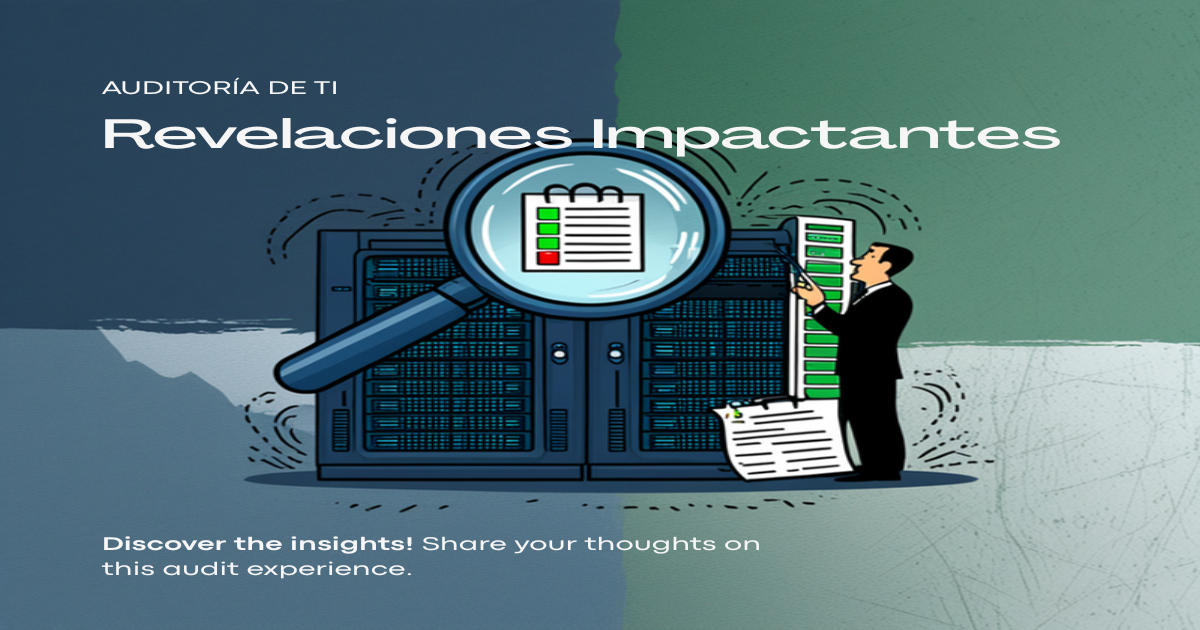
A system audit is not a punitive inspection. It does not look for culprits or monitor what employees are doing. It is a traceability tool that protects the business, improves its processes, and surfaces vulnerabilities before an incident does it the hard way.
What a system audit actually is
A system audit is a structured technical review process that evaluates an organization’s technology infrastructure across four dimensions: security, availability, data integrity, and compliance. Unlike an informal review, an audit produces recorded, comparable, auditable evidence. That has legal, operational, and strategic value.
Why companies avoid audits
The most common resistance comes from two sources: the fear of discovering problems — as if not knowing were a form of protection — and the perception that audits are expensive and disruptive. Both objections ignore the alternative cost: an undetected security incident, a compliance failure detected by a regulator, or a public data breach. In all those cases, the cost far exceeds that of any preventive audit.
What a well-executed audit reveals
In the audits AVN Networks has conducted for Costa Rican companies, the most frequent findings include: active user accounts of former employees; software without security updates installed for months; network access without segmentation; configured but unverified backups with accumulated silent failures; admin passwords shared with no usage log; equipment running out-of-support operating systems. None of those findings are exceptions. They are the norm in companies that have not conducted a formal audit in more than 18 months.
Audit as a compliance tool
Costa Rica’s Law 8968 on Personal Data Protection establishes that organizations must implement adequate technical and organizational measures to protect the personal data they process. A periodic audit is the evidence of due diligence — and it is not optional for companies that handle customer data.
Recommended frequency
For companies with fewer than 100 employees: one complete technical audit per year, supplemented by quarterly reviews of critical points such as privileged access, security patch status, and backup operation. For regulated sectors — financial, healthcare, legal — semi-annual audits with monthly key indicator reviews.
The value of traceability
When an incident occurs — a modified invoice, an unauthorized access, a data loss — the company with audit records can reconstruct exactly what happened. The company without those records navigates blind in its own infrastructure. Traceability also protects the internal IT team: when there is documentation, responsibilities are clear.
When was the last formal audit of your IT infrastructure? AVN Networks conducts technical audits with executive report and prioritized action plan. Request a no-cost initial assessment.