

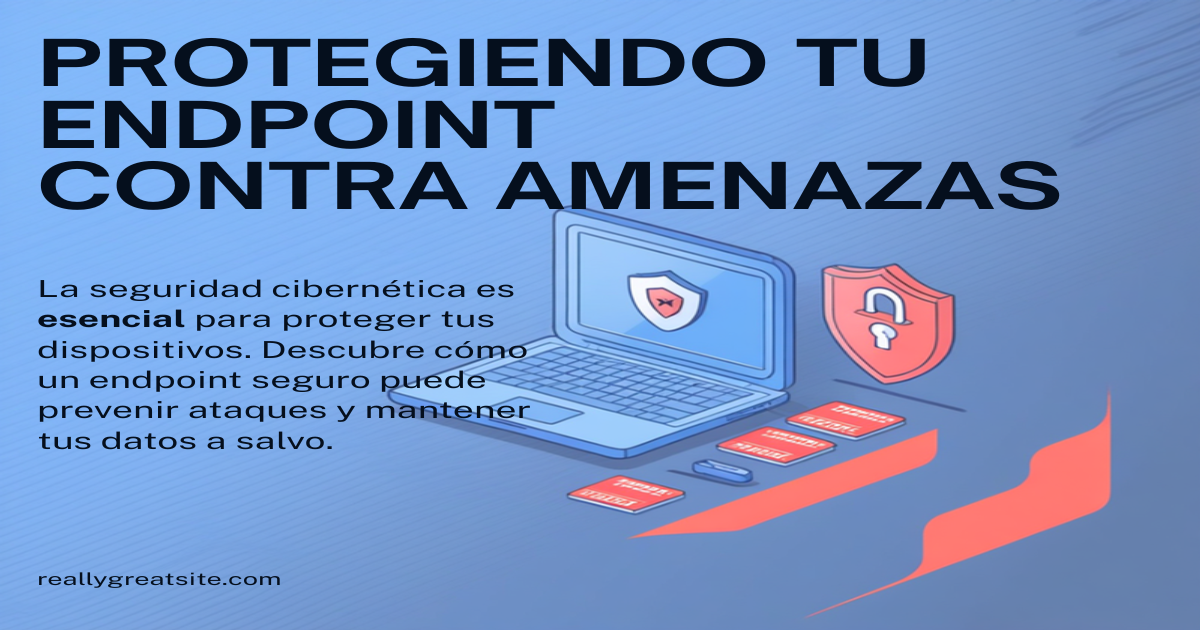
Most companies believe installing an antivirus is enough to protect their devices. It is not. Antivirus is the last line of defense, not the first. And by the time it is the last resort, the damage is usually already done.
The problem of confusing a tool with a strategy
An endpoint — any device that accesses the corporate network: laptop, desktop, smartphone, smart printer — is a potential entry point for an attacker. In practice, we have audited networks of Costa Rican companies where the only active control was a free or preinstalled antivirus with outdated definitions. Antivirus detects known threats through signatures. Today’s threat landscape is dominated by polymorphic attacks, zero-day exploits, and evasion techniques that have no registered signature.
What real endpoint protection requires
- Host firewall: controls connections entering and leaving the device, independent of the perimeter firewall.
- Behavior-based IPS: the intrusion prevention system observes anomalous activity patterns — not known signatures — and blocks before the payload executes.
- EDR (Endpoint Detection and Response): records continuous telemetry from the endpoint. When an incident occurs, it allows reconstruction of exactly which process executed which action, at what time, and with what privileges. Without EDR, incident response is blind.
- Application and device control: prevents users from installing unauthorized software or connecting USB drives without authorization. The USB vector remains one of the primary infection methods in environments without endpoint controls.
A real case: the machine that “never had problems”
In 2024 we audited the network of a professional services company in San José. The manager told us they had never had a security incident. Four hours into the analysis, we found an endpoint with an active keylogger that had been operating silently for seven months. The accounting system credentials had been compromised. The installed antivirus had never detected it. The keylogger used process injection into a legitimate Windows process — invisible to signature-based antivirus, an immediate alert for an EDR with behavioral analysis.
The real cost of inaction
The average cost of a security incident for an SMB in Latin America in 2024 was $127,000, including response, recovery, legal exposure, and reputational damage. The cost of a proper endpoint protection solution — EDR, host firewall, application control — for a 30-device company is a fraction of that figure.
The question worth asking today
If one of your devices has been compromised for the past three months, would your security tools have detected it? Would you have the telemetry to confirm it? If the honest answer is “I am not sure,” your company has a visibility gap that needs to be addressed before circumstances force it.
AVN Networks implements endpoint protection strategies that go beyond antivirus — with real detection, real response, and real telemetry. If your company’s devices are not properly protected, let’s talk about it today.